 THE CAPTAIN'S METHOD™
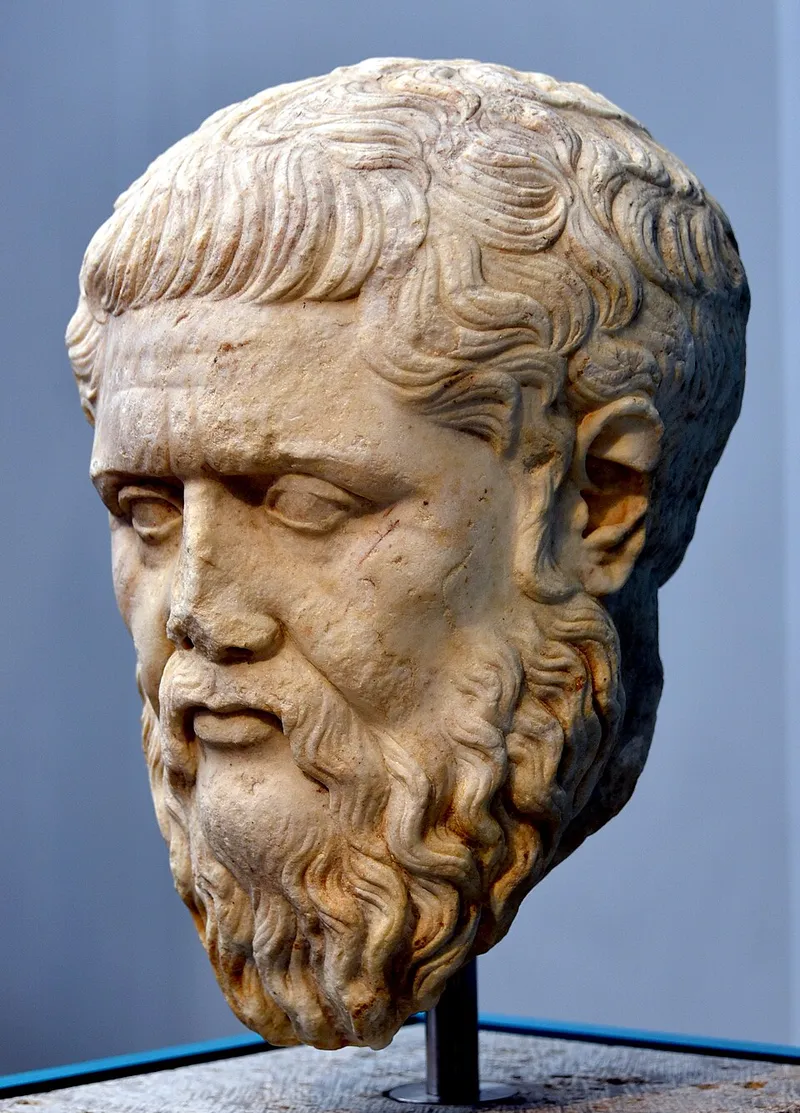
Socrates / Plato
Where this shows up in the Captain’s Method
Plato's dialogues are the oldest working model of the Debate Stage, where a member states a claim so its strongest defender would sign it and then tests it under pressure. The Cave sits under the Governing Pattern proposition Perception Precedes Experience and under Truth in Navigational Capability, perception anchored in what is there over self-deception. The same test governs the Captain's Library, where a Book earns a Discovery only after its claim survives questioning.
- Focus
The Cave shows people who take shadows for the world, the Focus claim that perception comes before experience.
- Personality
The freed prisoner goes back down to help the others, the move of a leader who carries clarity back to the crew at a cost.
- Environment
Dialogue makes the testing of an idea a shared act, the root of a crew that argues well.
Socrates taught in the streets of Athens and wrote nothing; in 399 BC a jury convicted him of impiety and corrupting the young, and he drank hemlock after turning down his friends' offer to help him escape. Plato, his student, turned those conversations into written dialogues with Socrates as the main speaker. In the 380s BC Plato founded the Academy in a grove outside Athens, and Aristotle studied there for about twenty years. Most of what we know of Socrates comes from Plato and Xenophon, so his voice and Plato's are hard to separate.