 THE CAPTAIN'S METHOD™
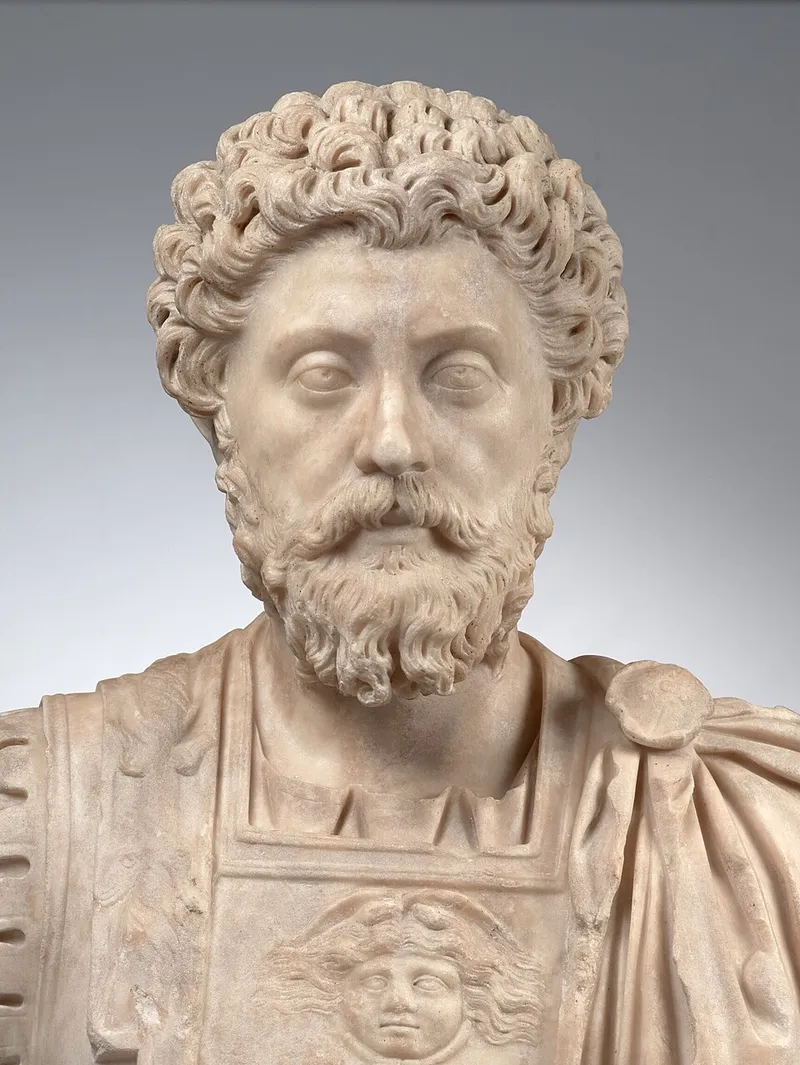
Marcus Aurelius
Where this shows up in the Captain’s Method
Marcus is the working precedent for the Equanimity chapter, a leader under heavy load keeping his judgment clear through daily practice. His teacher handed him Epictetus, and Epictetus's discipline of assent grounds the chapter's Values principle, where members catch themselves with the line "interesting how important X has suddenly become to me." His habit of naming the day's difficult people before dawn is the same move as Maybe They Have Pies, a reframe ready before the upset arrives. Guided journaling in the Captain's Method has its oldest model in his notebook.
- Focus
His notes separate an event from the judgment added to it, the move the Equanimity chapter trains.
- Personality
He rebuilds his character each morning through written practice, the repeated, friction-bearing work the Adventure Personality's Trait layer describes.
- Environment
He reminds himself that difficult colleagues are partners made for cooperation, which shapes how a captain treats a crew.
Marcus Aurelius was born in Rome in 121 AD and ruled from 161 until his death in 180, for eight of those years alongside Lucius Verus. His reign brought the Antonine Plague and the long Marcomannic Wars on the Danube frontier, where he spent much of his last decade with the army. His teacher Junius Rusticus lent him the discourses of Epictetus from his own collection, and Stoic practice shaped the rest of his life. The twelve books of notes he wrote to himself in Greek survive because a scholar in Zurich printed them in 1559 from a manuscript that has since vanished.