 THE CAPTAIN'S METHOD™
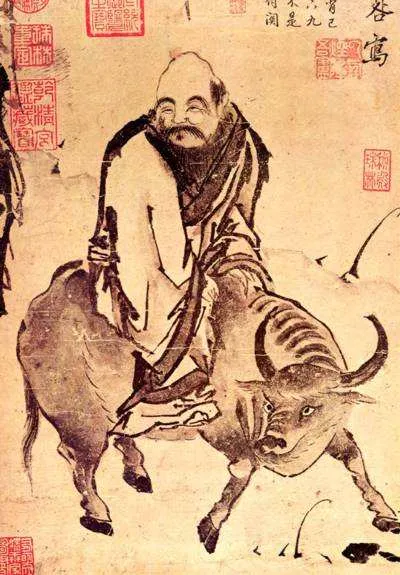
Lao Tzu
Where this shows up in the Captain’s Method
Lao Tzu stands closest to the Constraints chapter, where a member stops pushing on every link and gives the system's one constraint what it needs. He sits behind the Woodcarver too, since that story comes from Chuang Tzu, the second founding Taoist book, and Khing forgetting praise before he cuts is wu wei in a craftsman's hands. His picture of the leader who fades from view shapes Stage 9 of the Return Map, Exit / Closeout / Succession, where the work has to run without its author. His water stance also feeds Equanimity, a way of being settled before the moment arrives.
- Systems
Wu wei means learning how a system already moves and working with that motion, the same instinct the Constraints chapter trains.
- Personality
Water gives the Adventure Personality an image of strength that bends and keeps its course.
- Environment
Chapter 17 praises the leader whose people finish the work and say they did it themselves.
Tradition names Lao Tzu as the author of the Tao Te Ching. The historian Sima Qian, writing around 100 BC, said he kept the archives at the Zhou court and, leaving by the northwest border, wrote about 5,000 characters at the request of the border official Yin Xi. Scholars now doubt he was one person and see the text growing over generations. The oldest copy yet found, on bamboo slips in a tomb at Guodian, dates to about 300 BC.