 THE CAPTAIN'S METHOD™
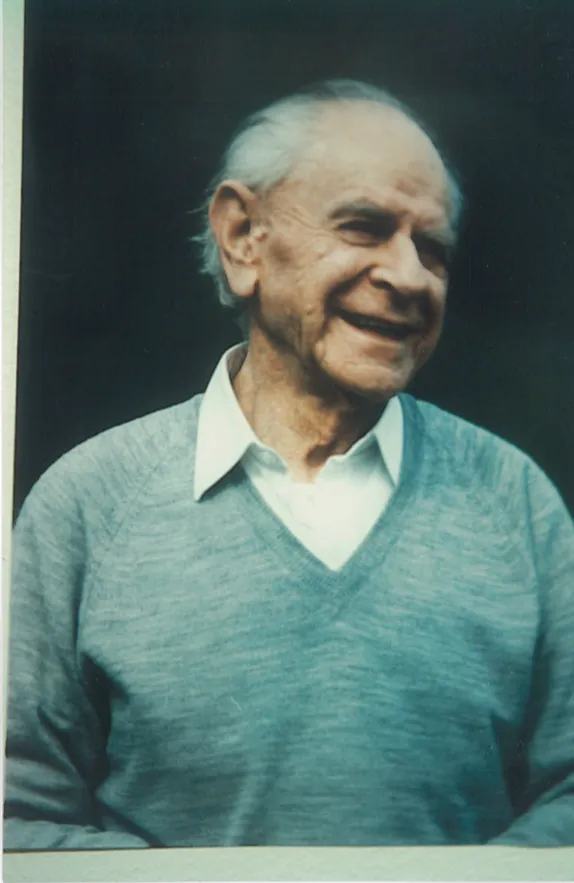
Karl Popper
Where this shows up in the Captain’s Method
Popper is the logic of the Debate Stage, where a member states a claim so its strongest defender would sign it and then the cohort tries to break it. He runs through the Plan phase of the Return Map, where Third-Party Validation asks an unbiased party to attack the Gap Analysis and the P95 Plan is built from pessimistic as well as optimistic estimates. He also backs the Humility term in Navigational Capability, revising the map when reality proves us wrong, and the Equanimity principle that moves members from Insistence on Being Right toward Collaborative.
- Focus
He gives judgment a discipline, naming what would prove a belief wrong before trusting it.
- Systems
His method shapes how a plan is built to be checked, in Third-Party Validation and the P95 Plan.
- Capacity
Treating a refutation as information makes error correction a skill that improves with practice.
Popper was born in Vienna in 1902, apprenticed as a cabinetmaker in his youth, and volunteered in Alfred Adler's clinics for children before earning a doctorate in psychology in 1928. He published Logik der Forschung in Vienna in 1934 and left for New Zealand in 1937, where he wrote The Open Society and Its Enemies at Canterbury University College in Christchurch. From 1946 he taught at the London School of Economics, he was knighted in 1965, and he died in Kenley, south of London, in 1994.