 THE CAPTAIN'S METHOD™
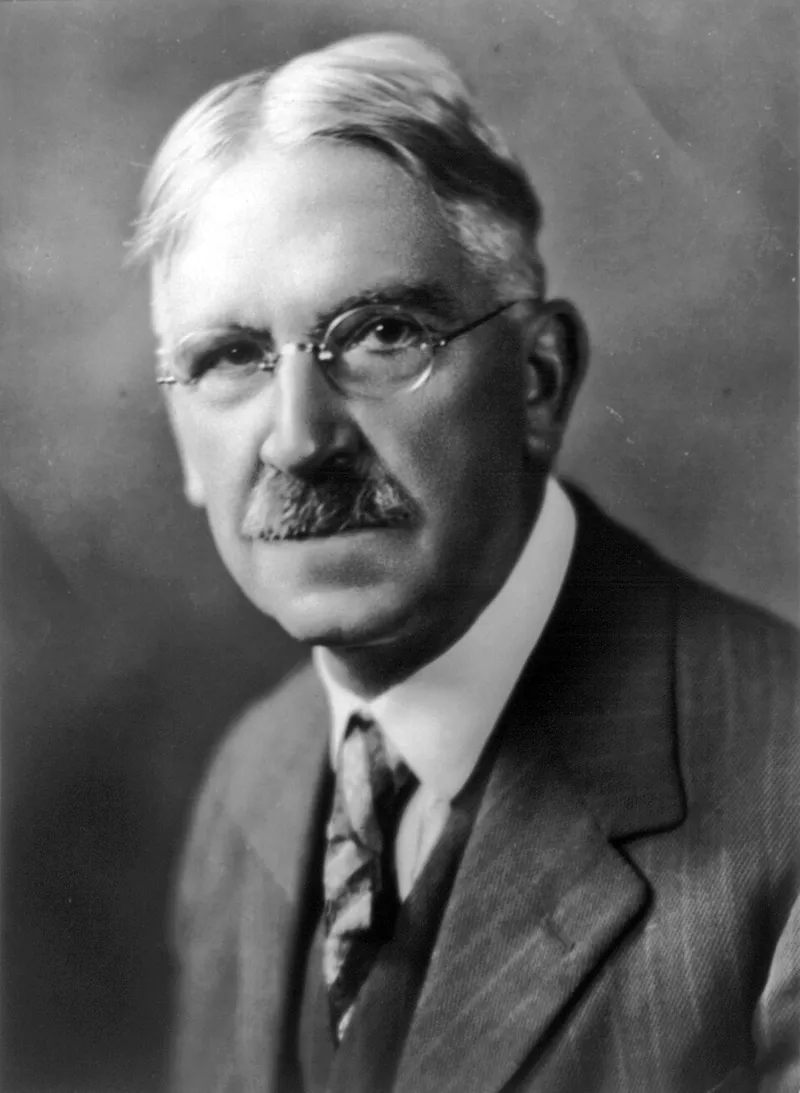
John Dewey
Where this shows up in the Captain’s Method
Dewey stands behind the delivery structure of the Captain's Method. Depth is the member's own working week instead of a simulation, which is his claim that learning happens inside lived activity. The experiential design loop of challenge, failure, reflection, strategy and retry runs on his definition of experience as trying and then undergoing the consequences, through Kolb's cycle, which built on him. The Situation Room applies his view that people learn best inside a working community, and proof at each Return Map stage ties every act to its result.
- Capacity
He held that skill grows through experience connected to its consequences, the loop behind practice and competence.
- Focus
His account of reflective thinking trains a person to test an idea against what happens before trusting it.
- Environment
He saw learning as social, shaped by the community a person works in, which is how a cohort teaches its members.
John Dewey was born in Burlington, Vermont, in 1859 and became a founder of American pragmatism. In January 1896 he opened the Laboratory School at the University of Chicago with 16 students in a small house, where children learned through gardening, cooking, carpentry and running a cooperative community. He taught at Columbia from 1904 to 1930 and spent 1919 to 1921 in China, giving nearly 200 lectures. His books on education shaped the progressive education movement.