 THE CAPTAIN'S METHOD™
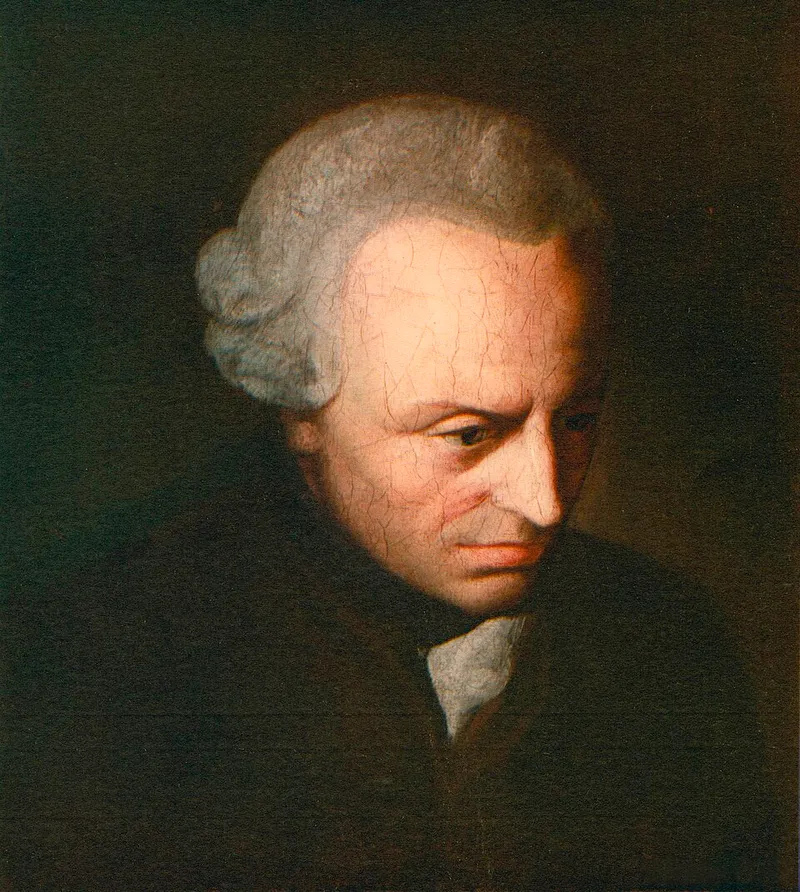
Immanuel Kant
Where this shows up in the Captain’s Method
Kant sharpens the KITA lesson, since his shopkeeper who stays honest because honesty pays is the clearest picture of movement mistaken for motivation. On the Debate Stage his universal test becomes a pressure test, as a claim has to survive being applied by everyone, including the people it costs. In Map Stakeholder ACCORD and Deal Structure his rule to treat each person as an end shapes how a member scores every party and what terms they offer.
- Focus
His universal test is a judgment check any decision can be run through before it is made.
- Environment
His rule to treat every person as an end, never merely as a means, sets the floor for how a leader deals with stakeholders and crew.
- Personality
He located moral worth in the motive behind an act, the inner source the Captain's Method calls motivation.
Kant was born in 1724 in Königsberg, Prussia, the son of a harness maker, and spent his whole working life at its university, becoming professor of logic and metaphysics in 1770. After a silent decade of work he published the Critique of Pure Reason in 1781, then the Groundwork in 1785 and the Critique of Practical Reason in 1788. His routine was so regular that neighbors were said to set their watches by his daily walk. He died in Königsberg in 1804.