 THE CAPTAIN'S METHOD™
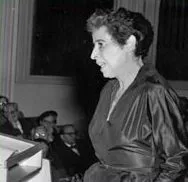
Hannah Arendt
Where this shows up in the Captain’s Method
Arendt grounds the Collaborative Communication chapter and the Situation Room, since she showed that power springs up between people when they act together and needs witnesses to exist. In the Thinking chapter and on the Debate Stage she supplies the reason to stop and examine a process before running it. Her report on Eichmann gives the Constraints chapter's proposed epigraph, about systems so perfect that no one will need to be good, its sharpest case. Her account of the promise shows up in Deal Structure, where each party's commitment is set down so the plan can lean on it.
- Environment
She placed freedom and power in people acting together before witnesses, the ground of collaboration and the cohort.
- Focus
She treated thinking as the habit of stopping to examine what we are doing, the habit that procedure on autopilot erodes.
- Systems
Her report on Eichmann shows what happens when a system is trusted to replace judgment.
- Personality
Her idea of natality, that each person can begin something new, fits the Adventure Personality's stance toward beginnings.
Arendt was born in 1906 in Linden, now part of Hanover, grew up in Königsberg, and studied philosophy with Martin Heidegger and Karl Jaspers. In 1933 the Gestapo held her for eight days for researching antisemitic propaganda, and she fled to Paris; in 1940 she escaped the internment camp at Gurs and reached New York in 1941. She wrote The Origins of Totalitarianism (1951) and The Human Condition (1958) and reported on the 1961 Eichmann trial for The New Yorker. She died in her New York apartment in 1975.