 THE CAPTAIN'S METHOD™
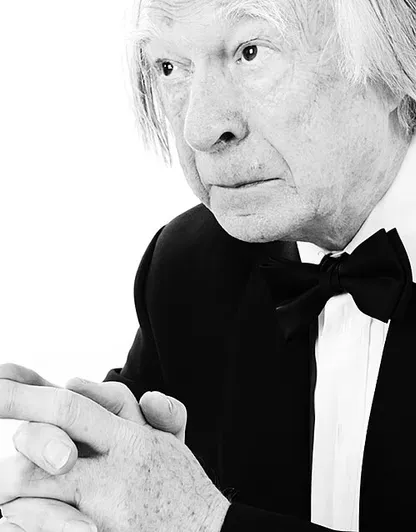
Denis Noble
Where this shows up in the Captain’s Method
Noble stands on the Systems shelf beside Donella Meadows. Meadows teaches members to see stocks, flows and feedback loops; Noble adds that the loops cross levels, from molecule to cell to organ and back, so in Chapter 3, Method, a member reading a Swim Chart of Idea Blocks traces how the state of the whole system feeds back on each block. In Gap Analysis and Third-Party Validation his heart models are the reason a plan is checked as a working whole, since function comes from how the parts interact. On the Debate Stage, members use his dispute with the gene-centered view as practice, stating the selfish-gene case so its strongest defender would sign it before testing it against his, and the same habit backs the Humility term in Navigational Capability, revising the map when the evidence moves.
- Systems
His principle of biological relativity says no level of a living system holds the master switch, so a leader reads the ship as feedback loops running up and down through every level.
- Focus
He trains attention on the working whole before its parts, the shift the Focus section opens with in the Boat Story.
- Personality
His view of organisms as agents with purposes gives the Adventure Personality, agency under constraint, a footing in biology.
Noble was born in London in 1936 to a family of tailors, studied at University College London, and published his computer model of the heart's pacemaker rhythm in Nature in 1960, a year before he finished his doctorate. He moved to Oxford in 1963 as a fellow of Balliol College and held the Burdon Sanderson Chair of Cardiovascular Physiology from 1984 to 2004. He was elected a Fellow of the Royal Society in 1979, helped launch the Physiome Project to model the human body from molecules to organs, and served as president of the International Union of Physiological Sciences from 2009 to 2017. He examined Richard Dawkins's doctoral thesis at Oxford, and in 2022 the two debated the role of the gene in evolution.