 THE CAPTAIN'S METHOD™
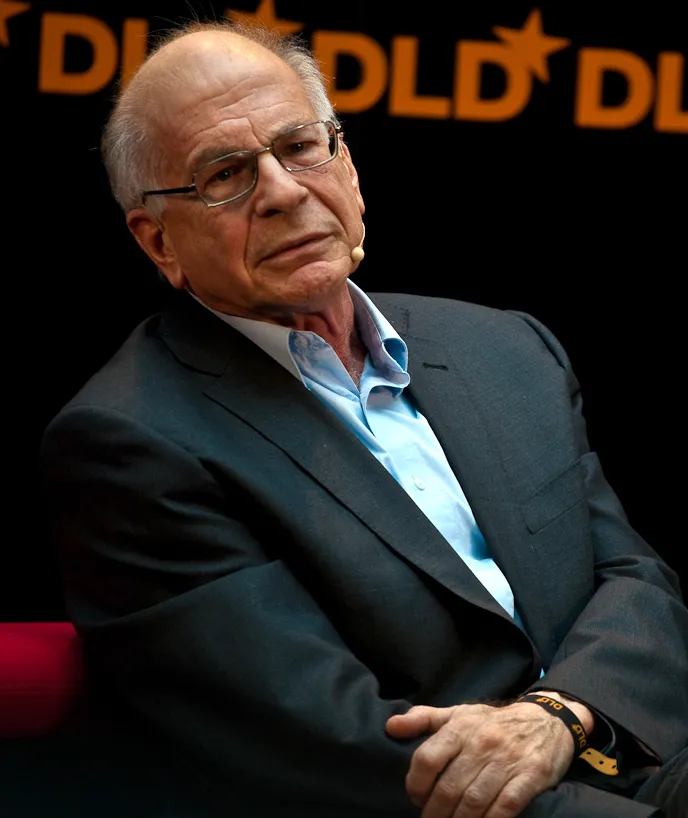
Daniel Kahneman
Where this shows up in the Captain’s Method
Kahneman's outside view is the logic behind the three-point estimate checked at Stage 5, Third-Party Validation, and behind Stage 6, the P95 Plan, where a plan is built to a 95 percent probability instead of a best case. In the Thinking chapter, Six Thinking Hats separates modes of thought so fast judgment does not run the meeting alone, and the Red Hat marks where intuition has a place. The Debate Stage is deliberate slow thinking, a claim held up and tested before the group acts on it.
- Focus
His account of System 1 and System 2 shows where judgment goes wrong and when to slow down.
- Systems
Tools like the premortem and the outside view build checks against bias into how decisions get made.
- Environment
He argued that organizations can catch errors that individuals miss, because others see our blind spots.
Kahneman was born in Tel Aviv in 1934 and spent his childhood in Paris, where he lived through the Nazi occupation. As a young officer in the Israel Defense Forces he designed a structured interview for combat recruits that stayed in use for decades. With Amos Tversky he mapped the heuristics and biases of judgment and built prospect theory, work that earned him the 2002 Nobel Memorial Prize in Economic Sciences, shared with Vernon L. Smith; Tversky had died in 1996. He taught at Princeton and died in 2024.